Celebrating Kwanzaa
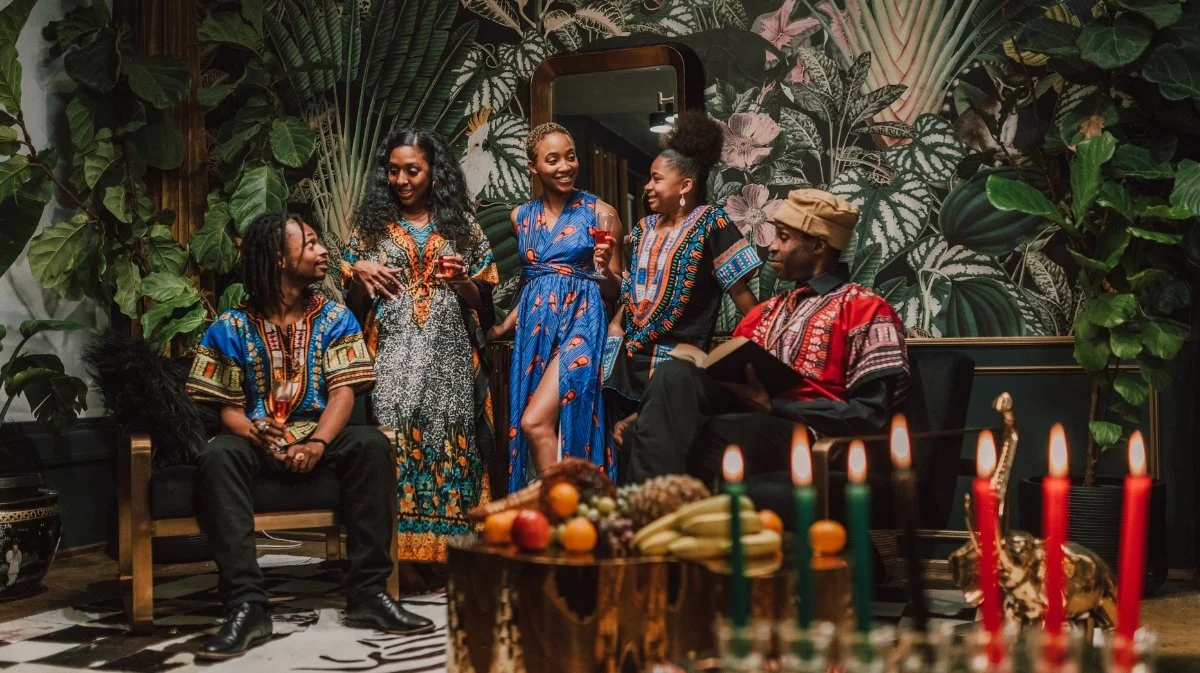
Kwanzaa attire is important because wearing African-inspired clothing and colors is a powerful expression of cultural identity, a way to honor heritage, and a means to reinforce the holiday's core principles like unity and self-determination.
Kwanzaa is a cultural holiday celebrated from December 26th to January 1st, mainly by Black Foundational Americans, to honor African heritage.
Created in 1966 by Dr. Maulana Karenga. It's designed as a non-religious celebration (people can observe it alongside religious holidays) foster African heritage, unity, and self-determination by focusing on the Nguzo Saba (Seven Principles) like Unity, Self-Determination, and Creativity, providing an alternative to dominant cultural celebrations and strengthening family/community bonds through shared values, history, and cultural pride. It serves as a powerful tool for cultural affirmation, passing down traditions, and celebrating the whole spectrum of Black identity, resilience, and contributions.
Each day focuses on one principle The Seven Principles (Nguzo Saba)
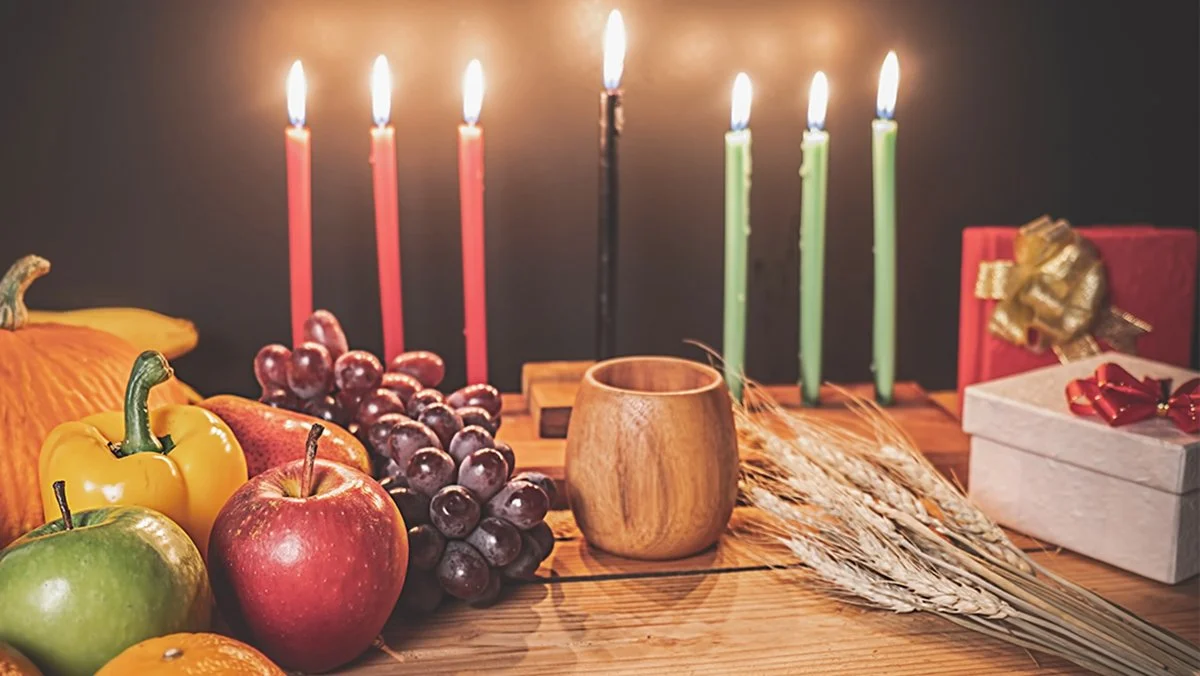
The celebration uses seven primary symbols placed on a straw mat called a Mkeka.
Umoja – Unity
Kujichagulia – Self-Determination
Ujima – Collective Work and Responsibility
Ujamaa – Cooperative Economics
Nia – Purpose
Kuumba – Creativity
Imani – Faith
The common symbols are normally represented throughout the home and window for community visibility.
Kinara: candle holder with 7 candles (black, red, green)
Mkeka: woven mat
Mazao: fruits/vegetables (harvest)
Kikombe cha Umoja: unity cup
Zawadi: gifts (often handmade or educational)
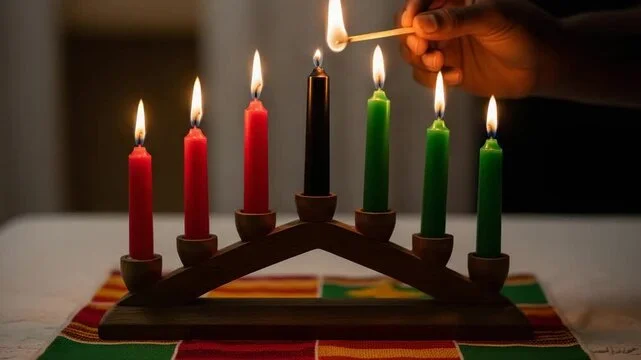
After lighting, participants discuss the day's principle and its importance in their lives and community. Following the discussion, the Kikombe cha Umoja (unity cup) may be passed around, and some families call out "Harambee!" seven times.
Lighting one candle each night, family discussions, music, storytelling. Community events and feasts. In essence, Kwanzaa provides a framework for Black people to celebrate their unique cultural heritage, reinforce community values, and build a stronger future. (especially on Dec. 31)++