Billionaires Row Black Women Are Leading
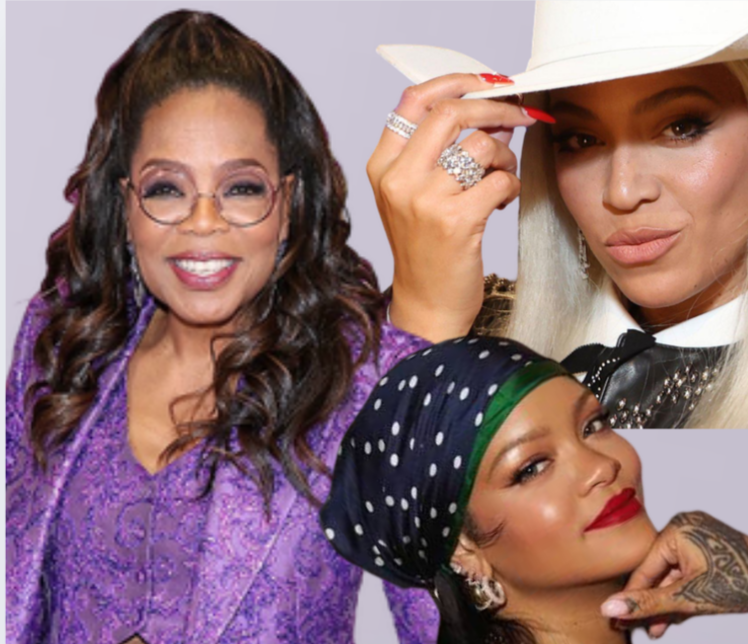
The most prominent Black female entertainer billionaires are Oprah Winfrey, a media mogul, and Rihanna, a music and beauty/lingerie entrepreneur, with Beyoncé also frequently cited near billionaire status until recently.
These women achieved their wealth through diverse ventures, from television and film to beauty, fashion, and music.
In an industry that has historically profited from Black women’s talent far more than it has protected their ownership, the rise of Black women entertainers into billionaire status is more than a headline—it is a business case study. These wins are rare by any standard, and rarer still within America’s wealth rankings, where Black billionaires remain a limited group and Black women are fewer still.
What makes these stories culturally magnetic is not simply the numbers. It is the method: transforming spotlight into infrastructure—equity, intellectual property, licensing, distribution, and brand ecosystems that can outlive a tour cycle or TV season.
Who’s on the billionaire list—and what built the wealth
Oprah Winfrey is the original modern media mogul
Long before “creator economy” became a business buzzword,Oprah Winfrey built a vertically integrated media machine grounded in audience trust and ownership. Her nationally syndicated talk show ran for 25 years, but the engine behind her wealth was never limited to a single platform. Oprah’s model linked media, production, publishing, partnerships, and long-term equity plays into one compounding system.
As multiple wealth trackers and historical reporting have noted, Winfrey was recognized by Forbes as the first Black woman billionaire (with the milestone widely cited as being achieved in the early 2000s). She has also been cited as the only Black woman on certain U.S.-focused billionaire roundups—an illustration of both her magnitude and the gap that remains.
Rihanna beauty as the billion-dollar accelerator
Rihanna is one of the clearest examples of a 21st-century entertainer turning cultural influence into scalable ownership. The key inflection point wasn’t music; it was brand architecture. By aligning product-market fit with inclusive positioning and global distribution, she helped prove what many executives ignored for decades: underserved consumers are not a niche—they are the market. Rihanna’s billionaire status is regularly attributed to the compounding power of equity stakes and brand valuation—wealth built not merely from endorsements, but from ownership structures that scale beyond a single campaign.
Beyoncé:’s billionaire era of the multi-hyphenate enterprise
Recent reporting places Beyoncé among the few Black Americans who have entered the billionaire ranks—joining a short list that includes Rihanna and Oprah Winfrey. That rarity matters. But equally important ishowBeyoncé’s wealth has been built: through a long arc of reinvention that increasingly prioritizes control—over masters, touring economics, brand partnerships, and a widening portfolio of business ventures.
Her career has been a real-time demonstration of what happens when an entertainer treats each album, tour, and partnership as a lever to expand enterprise value. The end result is less “celebrity rich” and more “institution rich”: a structure designed to endure.
The public often sees the glamor—stadium crowds, red carpets, magazine covers. The billionaire math is quieter: licensing deals negotiated for equity, intellectual property protected, distribution channels secured, and teams built to manage scale.
These women prioritized equity over fees—ownership stakes outperform one-time payoThey protected their brand truth—authenticity, when operationalized, becomes a business advantage.
Even with these breakthroughs, the broader context remains stark: Black billionaires are still a small segment within overall wealth rankings, and Black women occupy only a sliver of that already limited space. That’s why each milestone lands as both celebration and commentary—proof of possibility, and evidence of how steep the climb remains. As entertainment economics shift—streaming payout debates, touring volatility, and algorithm-driven discovery—future billionaire pathways are likely to lean even harder into ownership and enterprise diversification.
Oprah, Rihanna, and Beyoncé did not simply “earn” their way to a billion. They engineered it—through ownership, leverage, and disciplined expansion beyond the stage and screen. Their careers show that the most powerful currency in entertainment is not clout; it is control.
If the next generation of Black women entertainers wants to turn visibility into generational wealth, the lesson is clear: build the art, but own the infrastructure that sells it.
Serena Williams: Tennis icon turned successful investor and entrepreneur (Serena Ventures).
Shonda Rhimes: Producer and writer behind major hits (Grey's Anatomy, Scandal) with significant deals.
Sheila Johnson: Businesswoman, co-founder of BET (Black Entertainment Television). While sometimes reported with varying estimates, Forbes real-time data lists her as a billionaire after co-founding l BET and selling it, then expanding into luxury hospitality and sports team ownership.
Alicia Keys, Halle Berry, Queen Latifah, Jada Pinkett Smith, Tracee Ellis Ross, all have successful careers in acting, music, producing, and endorsements build their substantial wealth. These women leverage their entertainment platforms to create significant business empires, making them some of the wealthiest Black women globally.